

Introduction
Every winter, the National Capital Region (NCR) braces for another battle with smog — a toxic haze that chokes cities, diminishes visibility, and impacts millions of families. In late 2025, Delhi and neighbouring cities such as Noida, Ghaziabad, and Gurgaon have once again recorded ‘severe’ to ‘hazardous’ Air Quality Index (AQI) levels, raising concerns from health experts and residents alike.
1. How Bad Is It? Understanding the Winter AQI Crisis
AQI is a standard measure used to describe how polluted the air is and what its impacts might be on human health. According to recent Central Pollution Control Board data:
- AQI surpassed 385–400+ in many areas, placing it in the “Very Poor” to “Severe” categories.
- Some local spots even recorded AQI above 450, well into the “Severe” zone, posing significant health risks.
- Calm winter winds and temperature inversions trap pollutants close to the ground, worsening smog conditions.
This sharp rise during winter — often between November and January — reflects how meteorological conditions combine with human activities to produce dangerous air quality.
Delhi NCR Winter AQI Data (December 2025)
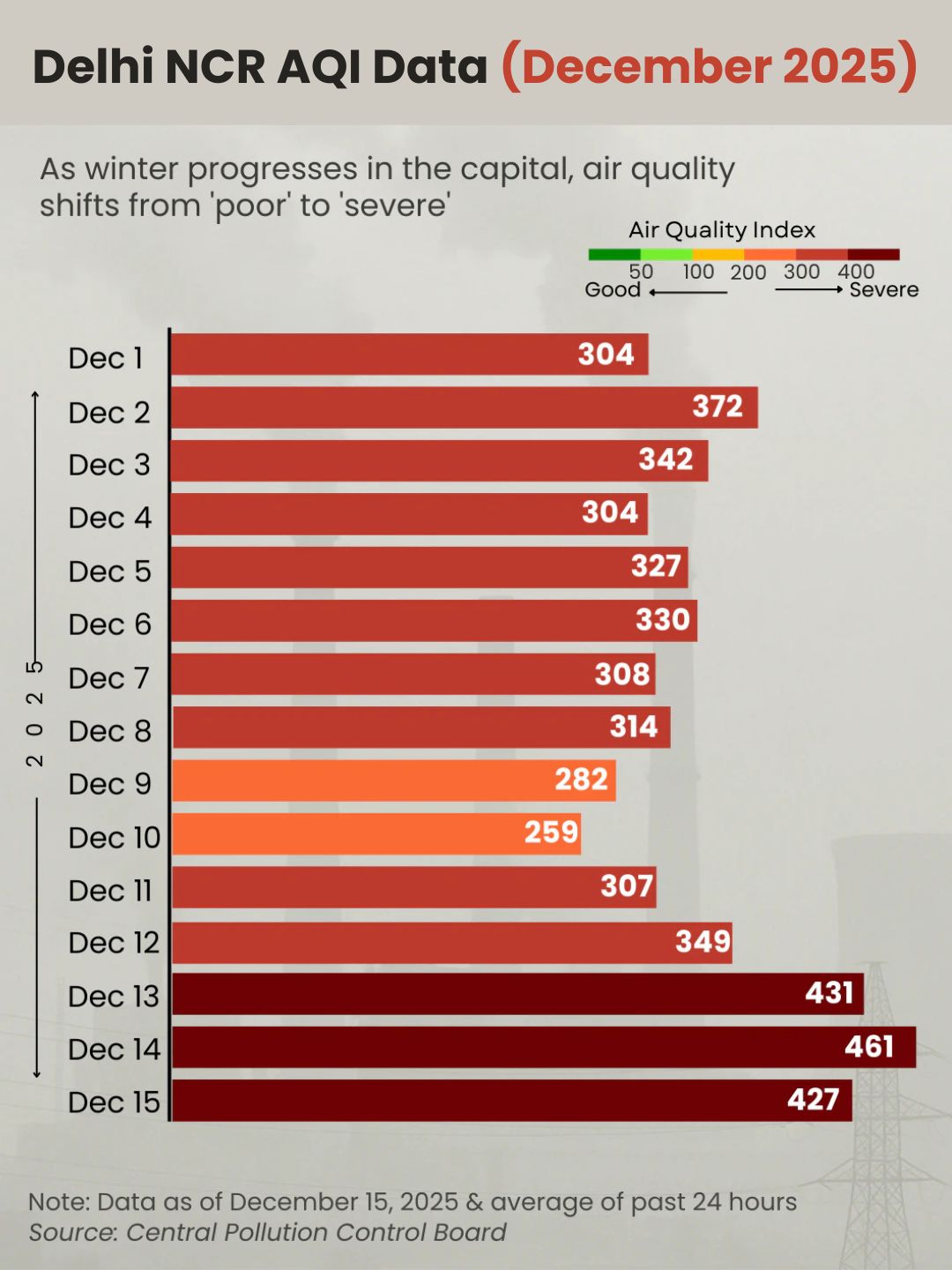
Reference: https://www.ndtv.com/india-news/toxic-winter-delhis-aqi-breaches-460-ncr-cities-gasp-for-air-9816704
2. What’s Contributing to the Smog?
Winter smog in Delhi NCR isn’t caused by one single factor — it’s a complex interplay of sources:
- Vehicular emissions: Local data shows that traffic remains a major contributor to harmful particulate matter (PM2.5 and PM10).
- Construction and dust: Ongoing construction activity raises fine dust, especially in the dry season.
- Seasonal factors: Cooler temperatures reduce vertical mixing in the atmosphere, trapping pollutants.
- Regional influence: Smoke from crop residue burning in neighbouring agricultural areas still adds to the haze in certain weeks.
It’s this mix of local emissions and weather that turns Delhi NCR into a smog hotspot every winter.
3. Health Impact: Families on the Frontline
Multiple surveys and reports reveal a direct connection between polluted air and health effects on residents:
- Over 80% of people in Delhi NCR reported health issues related to air pollution, including respiratory problems, allergies, and eye irritation.
- Children, the elderly, and those with chronic conditions are especially vulnerable, according to advisory warnings issued during severe AQI days.
Common symptoms associated with prolonged exposure include:
- Coughing, sore throat and irritation
- Breathing difficulty, wheezing and asthma flare-ups
- Burning eyes or headaches
- Chronic respiratory diseases over prolonged exposure
Medical experts warn that repeated exposure to high PM2.5 levels — far above the WHO safe limit — can lead to long-term health complications, including bronchitis and cardiovascular problems.
4. Impact on Daily Life & Families
Smog isn’t just a statistic — it influences daily routines, wellbeing and overall quality of life:
- Parents often track AQI before letting children play outdoors or go to school.
- Many families limit outdoor exposure, use masks, and install air purifiers indoors.
- Schools and offices sometimes shift to online schedules or staggered timings to reduce exposure.
- Families with sensitive members (infants, pregnant women, elderly) take extra precautions on high AQI days.
This behavior underlines how air pollution permeates every aspect of everyday life — from health to mobility to social activity.
5. What Does Data Say About Improvement or Trends?
Year-on-year data shows mixed signals:
- Delhi continues to rank as one of the most polluted major cities in the world, particularly in winter months.
- While some policy efforts and improved monitoring have shown limited seasonal improvement, the city still experiences regular spikes in smog levels.
Experts emphasize that without sustained action on transport, industry emissions, and regional cooperation, the winter smog will remain a recurring public health challenge.
6. Preventive Measures for Families
Here are practical tips for families living through winter smog:
- Monitor daily AQI and adjust outdoor activities accordingly.
- Use N95-type masks on severe smog days.
- Install HEPA air purifiers where family members spend most of their time.
- Keep windows closed in the morning when smog peaks.
Public health officials also recommend vaccinations like flu shots to reduce strain on the respiratory system during high pollution periods.
Conclusion
Winter smog in Delhi NCR is much more than a seasonal inconvenience — it’s a public health crisis with tangible effects on families across the region. The combination of high pollutant levels, dense haze and prolonged exposure can trigger respiratory conditions and impact quality of life. Lasting solutions will require policy action, community awareness, and behavioural changes to protect all residents, especially the most vulnerable.


